Space Tech Europe Expo 2026
Space Tech Europe Expo 2026 Space Tech Expo Europe is Europe’s leading B2B trade fair for space technology, components, and services, held annually in Bremen. It serves as a central…
The MNEMOSYNE project, led by 3D PLUS and funded by the European Union under the Horizon 2020 programme, was launched in 2019 with the aim of developing a new generation of radiation-hardened, high-density, non-volatile memory for space applications. Another goal was to ensure a long-term supply and to guarantee that production would take place entirely in Europe, thereby achieving independence from other countries. The name ‘MNEMOSYNE’ was inspired by the Greek goddess of the same name, who is considered the personification of memory.
Led by the 3D PLUS team, this project brought together leading experts in radiation effects and space electronics from institutions such as IMEC, the University of Padua, TRAD, NanoXplore and Beyond Gravity, who worked together on the MNEMOSYNE project. Following the successful development and qualification of the ASIC, full production of the entire MNEMOSYNE memory product line has commenced. The product line is ready for integration into space systems and offers an innovative storage solution that sets new standards in the space industry.
MNEMOSYNE is a state-of-the-art, radiation-insensitive, non-volatile memory (NVM) solution based on 22nm STT-MRAM FDSOI technology, tailored to meet the exacting demands of space applications. MNEMOSYNE modules integrate stacked, radiation-insensitive memory ASICs to achieve industry-leading density. These provide excellent data retention and extreme write endurance. The modules are available with serial or parallel interfaces and are supplied in SOP housings that enable robust SMT mounting and ensure resilience in harsh thermal and mechanical environments.
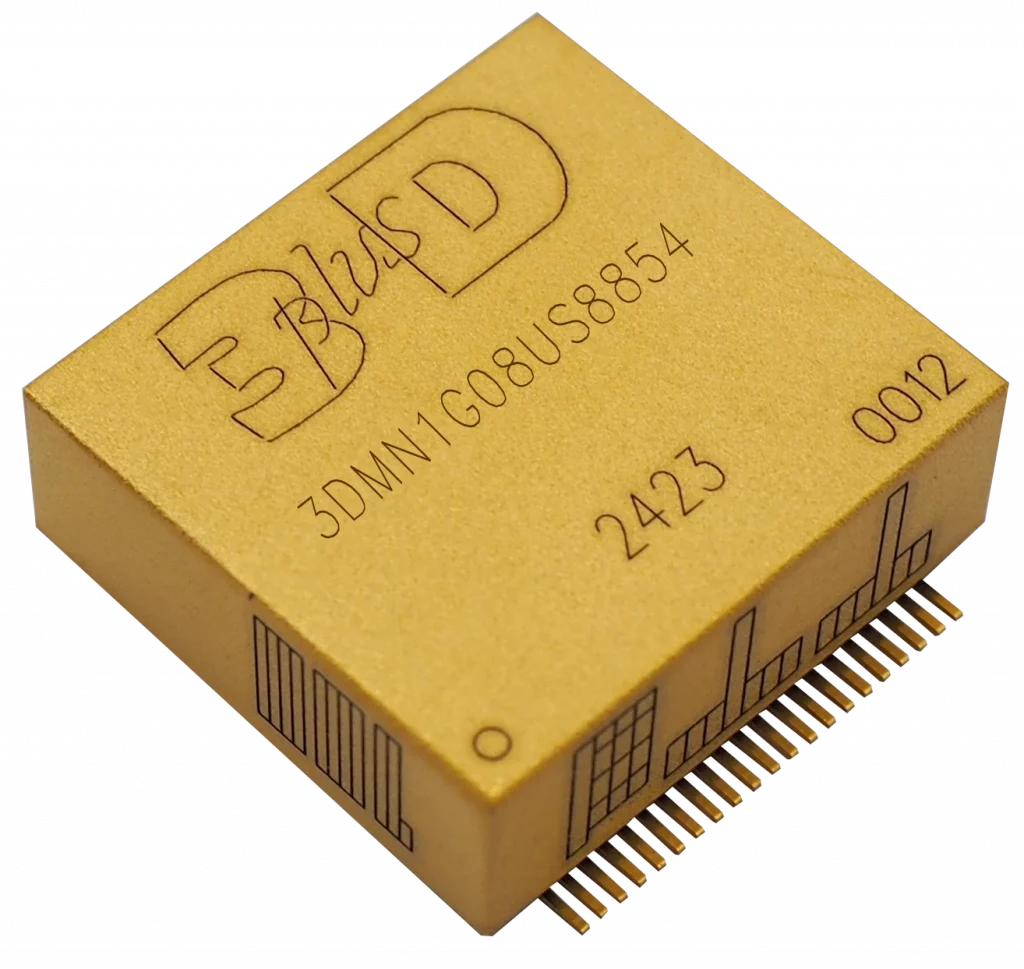
MNEMOSYNE memories are specifically designed for extreme space conditions and offer a total ionising dose of over 100 krad (Si), as well as high immunity to single-event effects. Thanks to its unrivalled reliability and density, MNEMOSYNE is the ideal solution for configuring the latest SRAM-based field-programmable gate arrays (FPGAs). It also serves as secure boot and programme memory for next-generation processors, as well as providing a reliable solution in highly radiated space environments.
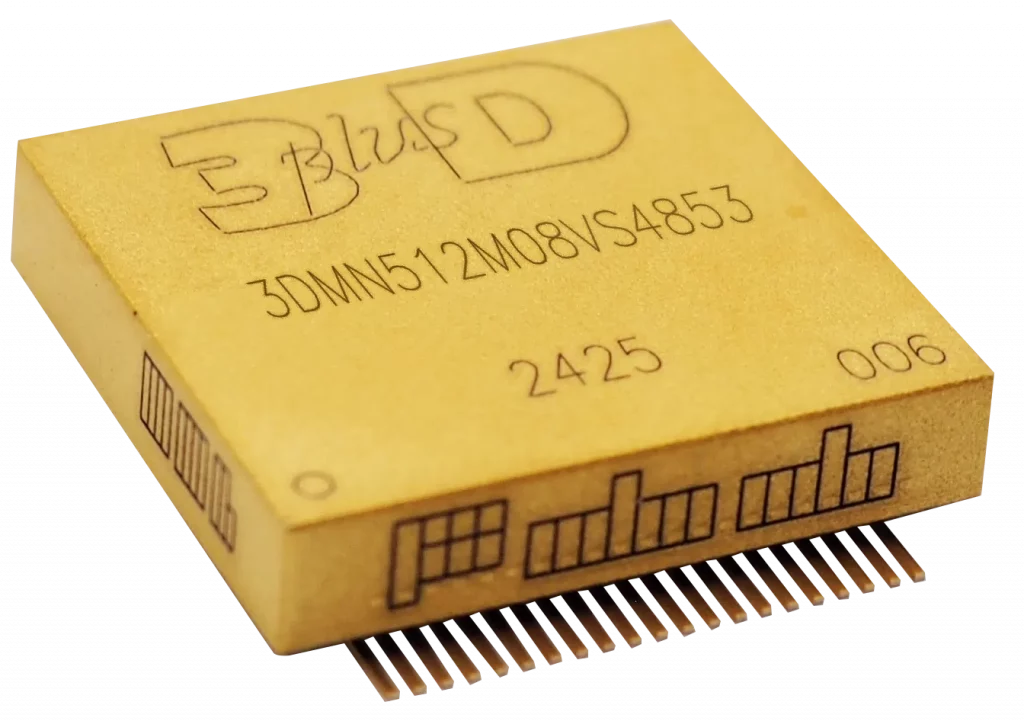
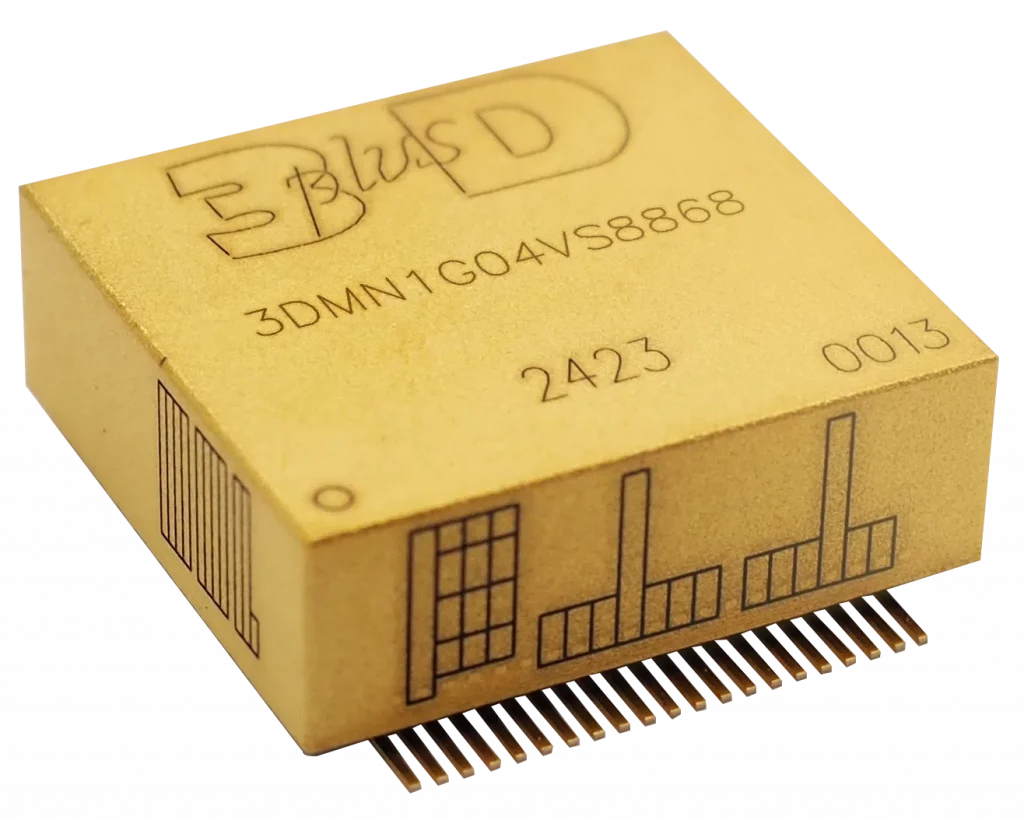
According to 3D PLUS, after six years since the start of the MNEMOSYNE project, all MNEMOSYNE memories are now fully qualified and ready for series production, with samples available immediately. The company used its advanced 3D stacking technology to develop three product lines based on the SEE-immune MNEMOSYNE ASIC. Each module combines radiation resistance, long-term data storage and low power consumption efficiently and effectively. The three product lines are as follows:
For more information about MNEMOSYNE and to explore how it can benefit your space missions, visit our dedicated information page: https://wonderful-mclaren.87-106-135-175.plesk.page/showcase/mnemosyne-a-non-volatile-memory-designed-for-space/
MSA Components supports European and international customers in selecting and integrating radiation-hardened 3D PLUS memories, space camera heads, camera systems and other highly miniaturised electronic solutions, as well as high-reliability solutions, into space-qualified systems. In collaboration with Hi-Rel Solutions by Steliau Technology and partners such as Exxelia, 3D Plus and Omnetics, MSA Components is driving the development of high-reliability electronic systems across a variety of industries.
This year, the MSA Components team and representatives from 3D PLUS will once again be present at Space Tech Expo Europe 2025. Visitors will have the opportunity to find out about the latest innovations in the field of capacitors as well as other technological advances and current products.
Note for visitors: Our team will be on site at Booth F11, together with our partners 3D PLUS, Omnetics, and Exxelia.